
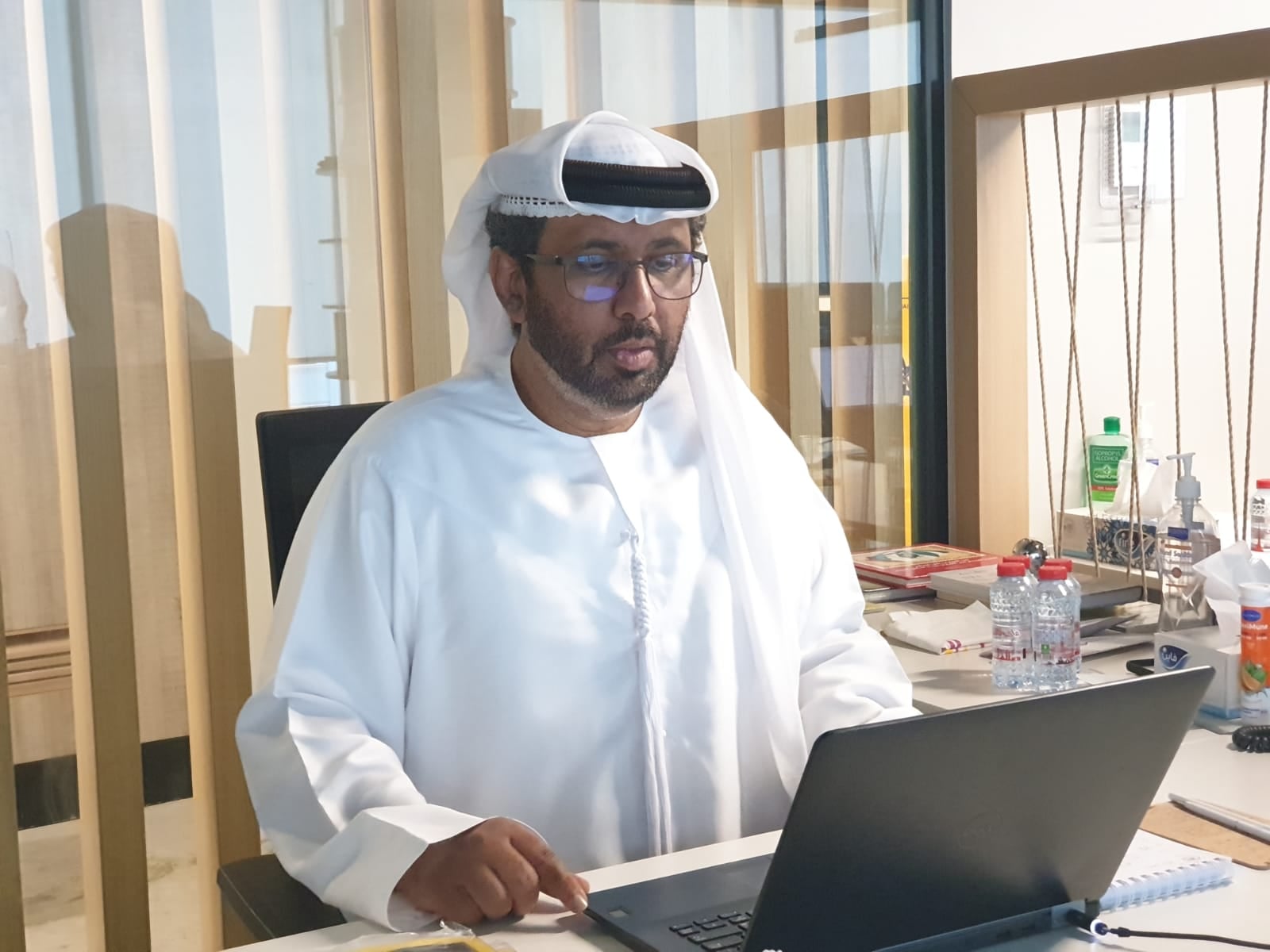
As part of the cultural cooperation between Dubai Culture and Arts Authority and the Juma Al Majid Center for Culture and Heritage, the Center organized an online lecture on Thursday, September 4, 2025, titled “Extracted Books in Arab Heritage.” The lecture was delivered by researcher Fahd Ali Al-Maamari, a specialist in Arab folklore and literature, and was attended by a distinguished audience of heritage enthusiasts from across the Arab world.
The lecture aimed to shed light on the nature of “extracted books” attributed to early Islamic-era scholars, revealing their true identity as partial selections or abridgments of larger works. This clarification helps researchers and readers avoid confusion between original works and their extracted counterparts.
Al-Maamari explained that this phenomenon goes beyond simply reprinting old books, encompassing several practices: authors themselves may extract specific topics from larger works and publish them independently; later scholars may compile material from voluminous texts and present it separately; or editors may publish incomplete manuscripts as standalone books. He also noted that certain modern practices reflect purely commercial motives.
The lecture highlighted numerous examples from Islamic heritage, including Balāghāt al-Nisāʾ by Ibn Ṭayfūr, Ṭabāʾiʿ al-Nisāʾ by Ibn ʿAbd Rabbih, Ibn Khaldun’s Muqaddimah, Stories of the Prophets by Ibn Kathīr, and Prophetic Medicine by Ibn al-Qayyim. While these works often appear as independent books, they were originally parts of larger compositions.
Al-Maamari emphasized that while the phenomenon reflects the richness of the Arab and Islamic library, it also calls for critical awareness among researchers and readers to distinguish between original works and their extracted or abridged versions.


